

Visual Identity
The University of Texas at Austin’s visual identity and brand architecture are rooted in academic tradition and excellence. Our global brand is most effective when we project a clear and consistent image that positions Texas as a leading public university.
Colleges, schools and units (CSUs) associated with the University should adopt the official logo configurations, typography, color palette and supporting marks to reinforce our brand and foster trust and recognition.
Colors
Primary Palette
Burnt orange and white are the official colors of the University. Burnt orange plays a major role in establishing our identity and should be implemented consistently in all digital and print applications.
Use of color must be consistent across the University. Referring to these Pantone®, CMYK, RGB and Hex values will eliminate the guesswork.
Pantone®
CMYK
RGB
HEX
PMS 159
0, 65, 100, 9
191, 87, 0
#bf5700
Pantone®
CMYK
RGB
HEX
—
0, 0, 0, 0
255, 255, 255
#ffffff
Logos & Marks
University Wordmarks
Our wordmarks are the primary means by which the University is recognized and should appear on all University communications. The wordmarks have been specially drawn and spaced; do not redraw, change, stack or reposition them.
How to Use University Wordmarks
The wordmarks may be used as instructed by the guidelines in all print and digital uses without additional approval. Any proposed use of the wordmark on merchandise — including but not limited to hats, mugs, pens and T-shirts — must have prior written approval from the Office of Brand, Trademarks and Licensing and be produced under a licensing agreement by an approved vendor.
College, School & Unit Marks

University Marketing and Communications (UMAC) creates all wordmark systems used across campus. CSUs should not attempt to make their own wordmarks. To request a new wordmark, please submit a request form.
Class Logos
These logos, created annually by University Marketing and Communications, are designed to unite cohorts of undergraduate students around their anticipated graduation year (e.g. the Class of 2030 logo is for students who were freshmen in Fall 2026). Colleges, schools and units (CSUs) are encouraged to use the class of logos in marketing and communications targeted to specific cohorts of students.

Longhorn Silhouette
The Longhorn silhouette represents the spirit of the University and is one of the most widely recognized University marks in the world.
The Office of Brand, Trademarks and Licensing must grant prior written approval for all uses of the Longhorn silhouette.

University Seal
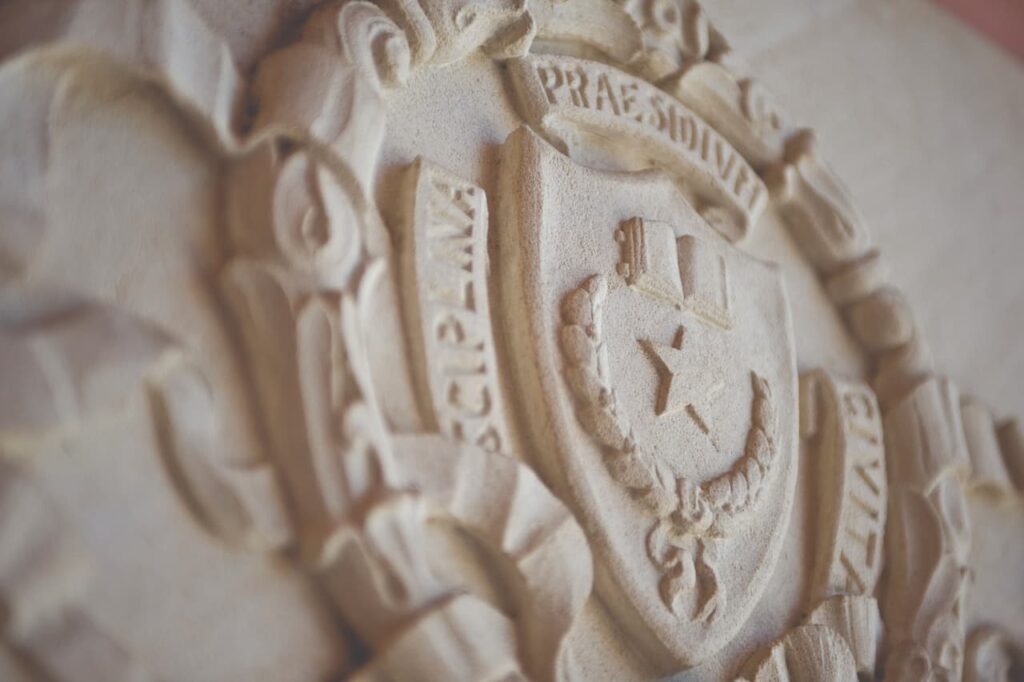
The University of Texas at Austin seal is an important element in our visual identity. Its use is reserved for official communications from the Office of the President, as well as business cards and stationery for all CSUs and official University documents, certificates, awards and plaques.

Hook ‘Em Hand
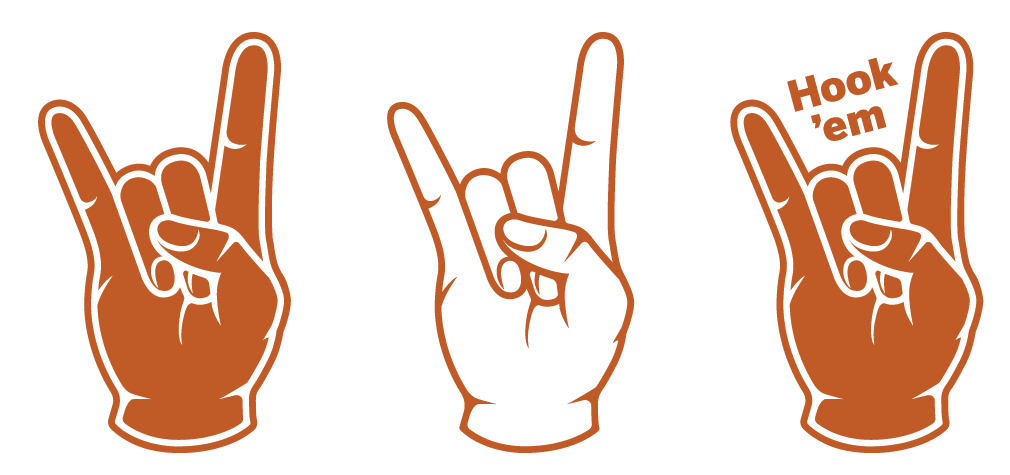
The Hook ’em Hand is a widely recognized symbol of the University and represents Longhorn pride.
The Office of Brand, Trademarks and Licensing must grant prior written approval for all uses of the Hook ’em Hand.
The Tower
The Tower is a well-known symbol of the University and represents our academic excellence; present its image tastefully and respectfully.
The Office of Brand, Trademarks and Licensing must grant prior written approval for all uses of the Tower.

Typefaces
Each of our official typefaces has a specific use. Together, they represent our brand while being optimized for ease of use across the University.
Serif Typefaces
GT Sectra
GT Sectra is the font used in the academic wordmark. It is a contemporary serif typeface chosen for its legibility and as a nod to academia.
Charis SIL & Georgia
When GT Sectra is unavailable, Charis SIL is the default alternative. Native to Windows and MacOS, Georgia is acceptable when neither GT Sectra nor Charis is an option.

Sans-Serif Typefaces
Benton Sans
Benton Sans is the primary font for all University publications. UMAC will provide a limited number of licenses for each CSU in limited weights.
Libre Franklin & Arial
Libre Franklin is web friendly and replaces Benton Sans in your web/digital environment. Libre Franklin can be downloaded for free via Google Fonts.
Arial is acceptable in print pieces when Benton Sans is unavailable.

Usage
Do:
- Use different typefaces together to create emphasis and a visual hierarchy that assists the reader in navigating your text.
- Use fonts, weights, color and point size to tell a story.
- Use plenty of surrounding white space.
Do not:
- Use all capital letters in blocks of type of three lines or more.
- Condense or expand typefaces.
- Add spacing between characters.
- Overuse emphases. Too much emphasis can have the opposite effect. If everything is emphasized, nothing stands out.
- Substitute any variation other than those listed above.
Licensing
UMAC has a limited number of licenses for Benton Sans and GT Sectra for use by faculty and staff members. Student employees who need access to these fonts should have their faculty or staff supervisor make a font request on their behalf.
Additional licenses can be purchased from Grilli Type for GT Sectra and MyFonts for Benton Sans.